Did you know that about 90% of the world’s nutrition such as fruits, nuts, and vegetables are pollinated by bees? Without the bees to pollinate our crops we will be a on shortage of food! In fact, there are more than 150 different chemical residues found in bee pollen, and the chemical industry have spent millions of dollars trying to cover up that they are not at fault. Since more grasslands and forests are converted into pesticide contaminated mono-culture-farms, bee colonies per hectare and habitat are rapidly shrinking every year.
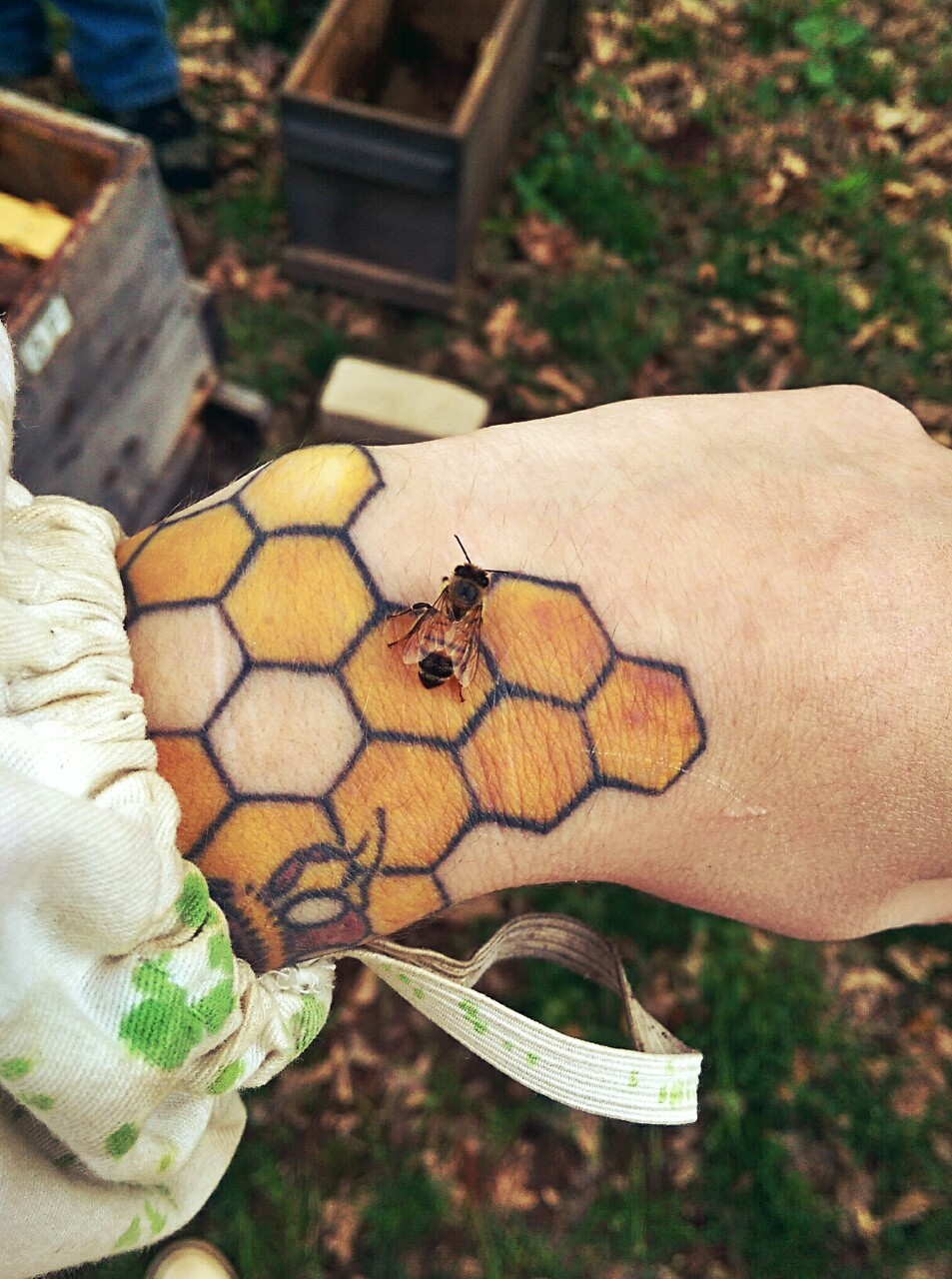
You can help spread awareness and save the bees by donating to Greenpeace or purchasing these honeycomb necklaces where a part of the proceeds go directly to Greenpeace.
What is GreenPeace?
Greenpeace is a global non-governmental campaigning organization that aims to expose environmental problems and promote solutions via using peaceful protest and creative communication.
An assignment I actually wrote on the board this week:
In groups, write 2 sentences (in Latin) using only the
vocabulary in your textbook. Make sure to include:
1 irregular verb
1 imperfect verb
5 cases
BEES?
I’ll elaborate in a minute, but I need to stop laughing
first.
So I’d originally planned on a 20-minute grammar lesson,
followed by a handout to be finished in pairs, but I’d made the mistake of telling
this class about Latin Day in April and how we were encouraging them to come to
school in costume. All they wanted to do was talk about costume opportunities
(and since I would like to keep my job, I had to explain why staging Caesar’s assassination
in the middle of the lunchroom would be a Bad Idea), so I shifted gears and decided
to channel that creative/social energy into a different assignment.
After lugging them through a condensed version of the
grammar lesson on irregular verbs in the imperfect tense, I split them into
groups and pulled an assignment out of the air.
The requirements:
Write two sentences in Latin
Use ONLY vocabulary from the textbook
Include at least ONE irregular verb
Include at least ONE verb in the imperfect tense
Include 5 (out of 6, including the vocative)
cases
The goal:
To write them on the board for their ‘rival’
groups to translate
They are a competitive bunch, so I knew this would be enough
to encourage them to go All Out. But then one student raised her hand.
“Can our sentences be about bees?” she asked.
Bees. I swear this class has a thing with Bees. I hesitated.
“There are no bees in your textbook.”
“Yes, but you taught us that word.”
I had, back when this same student had asked me how to say “the
bees are suffering” for a kahoot she was writing. Granted, this same student is
planning on coming in on Latin Day dressed as Caligula’s horse, so none of this
surprises me.
I opened it up to the other ‘groups’. “What do you think?” I
asked. “Should we let them write about bees?”
“No,” said one student with a heavy sort of solemnity, looking
me dead in the eye. “We should all be required
to write about bees.”
As the rest of the class eagerly cheered and nodded in
agreement, three things occurred to me.
The word for bee, “apis”, is a 3rd-declension
i-stem noun, which they could use more practice on.
They’re going to want to describe the bees,
which means they will likely also be practicing noun-adjective agreement with a
3rd-declension i-stem noun, which they could also use more practice
on.
This could be flipping hilarious.
And so I added “BEES?” to the list.
The results:
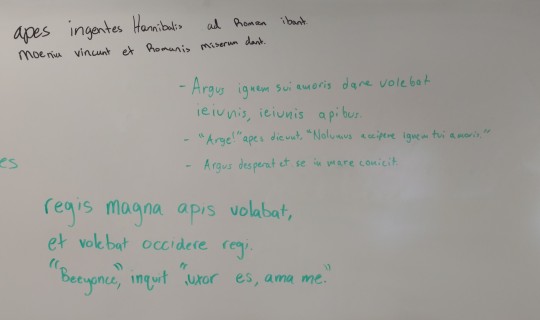
1. apes ingentes Hannibalis ad Romam ibant. Moenia vincunt et Romanis miserum dant.
“The giant bees of Hannibal
were going to Rome. They conquer the walls and give misery to the Romans.” In hindsight the noun miseriam would have been better, but still solid. Mentions bees AND misery. Implies an AU where Hannibal brought giant bees
across the Alps instead of elephants. Carthage wins the Punic Wars. 10/10
2. Argus ignem sui amoris dare volebat ieiunis, ieiunis apibus. “Arge!” apes dicunt. “Nolumus accipere ignem tui amoris.” Argus desperat et se in mare conicit.
“Argus was wishing to give
the fire of his love to the hungry, hungry bees. ‘Argus!’ the bees say. ‘We do
not want to accept the fire of your love.’ Argus despairs and hurls himself
into the sea.” Descriptive. Tragic. Mentions fire. Has something for
everyone. Also 10/10
3. regis magna apis volabat, et volebat occidere regi. “Beeyonce,” inquit, “uxor es. Ama me.”
“The great bee of the king
was flying, and he was wishing to kill for the king. ‘Beeyonce,’ he said. ‘You
are my wife. Love me.’ ” 100/10 for Beeyonce.



 The Chaos Bitches