its really weird to see all these articles about how people who have ADHD have sleeping problems but the issue I have is that if you look at it as a matter of your circadian rythym being out of sync? of COURSE you’re not going to be able to sleep. we don’t say people who can’t fall asleep at 4 pm and sleep 8 hours have insomnia, because that’s not a normally agreed upon time to sleep and its not your bodies time to sleep. if you tell someone to go to bed at 10 and they can’t sleep till 3 am sometimes in just not insomnia. people with ADHD are often wired to sleep from 4 am to 12 pm ish because of the delayed onset of melatonin but if you let us go to bed at the time we need? most of us actually sleep pretty well and consistently.
wAIT THIS IS AN ACTUAL THING THAT EXISTS
“For most adults the onset of melatonin is around 9.30 pm; in ADHD children compared to controls this occurs at least 45 minutes later, and in adults with ADHD even 90 minutes (van der Heijden ea, 2005; van Veen ea 2010). After melatonin onset, it normally takes 2 hours to fall asleep, but in adults with ADHD it takes at least 3 hours (Bijlenga et al, 2013).”
Look at me awake at 1:47 am and reblogging this post.
So I’m actually trained in therapy for addressing insomnia and one of the things we learned is that a good chunk of sleep problems are societal disorders – as in they WOULDN’T EXIST as problems if society didn’t assume everyone was on the same circadian rhythm and that being up and working 9-5 was mandatory/normal. Blew my mind and made so much sense. You are not the problem, society is literally the problem.
2. you know, we have fun here, with the word “meme,” but according to meme theory, which is an actual thing pioneered by reptilian human impersonator Richard Dawkins in his 1976 book The Selfish Gene, most of what we call memes are very unsuccessful memes. A meme, in the scientific sense – if one is generously disposed to consider memetics a science on any particular day – is an idea that acts like a gene. That is, it seeks to replicate itself, as many times as possible, and as faithfully as possible.
That second part is important. A gene which is not faithful in its replication mutates, sometimes rapidly, sometimes wildly. The result might be cancer or a virus or (very very very rarely) a viable evolutionary step forward, but whatever the case, it is no longer the original gene. That gene no longer exists. It could not successfully reproduce itself.
The memes we pass around on the internet are, in general, very short lived and rapidly mutating. It’s rare for any meme to survive for more than a year: in almost all cases, they appear, spread rapidly, spawn a thousand short-lived variations, and then are swiftly forgotten. They’re not funny anymore, or interesting anymore. They no longer serve any function, and so they’re left behind, a mental evolutionary dead end.
This rendition of Freddie Mercury’s immortal opera Bohemian Rhapsody is about the most goddamned amazing demonstration of a successful meme I’ve ever seen. This song is 42 years old, as of 2017. FORTY TWO YEARS OLD. And it has spread SO far, and replicated itself across the minds of millions of people SO faithfully, that a gathering of 65,000 more or less random people, with nothing in common except that they all really like it when Billie Joe Armstrong does the thing with the guitar, can reproduce it perfectly. IN PERFECT TIME. THEY KNOW THE EXACT LENGTH OF EVERY BRIDGE. THEY EVEN GET THE NONSENSE WORDS RIGHT. THEY DIVIDE THEMSELVES UP IN ORDER TO SING THE COUNTER-CHORUS.
“Yeah, Pyrrhic, lots of people know this song.”
Listen, you glassy-eyed ninny: our species’ ability to coherently pass along not just genetic information, but memetic information as well, is the reason we’re the dominant species on this planet. Language is a meme. Civilization is a collection of memes. Lots of animals can learn, but we may be the only animal that latches onto ephemera – information that doesn’t reflect any concrete reality, information with little to no immediate practical application – and then joyfully, willfully, unrelentingly repeats it and teaches it to others. Look at how wild this crowd is, because they’re singing the same song! It doesn’t DO anything. It’s not even why they showed up here today! If you sent out a letter to those same 65,000 people that said, “Please show up in this field on this day in order to sing Bohemian Rhapsody,” very few of them would have showed up. But I would be surprised to meet a single person in that crowd who joined in the singing who doesn’t remember this moment as the most amazing part of a concert they paid hundreds of dollars to see.
And they’re just sharing an idea. It’s stunning and ridiculous. Something about how our brains work make us go, “Hey!! Hey everybody!! I found this idea! It’s good! I like it! I’m going to repeat it! Do you know it too?? Repeat it with me! Let’s get EVERYBODY to know it and repeat it and then we can all have it together at the same time! It’s a good idea! I’m so excited to repeat it exactly the way I heard it, as loudly as I can, as often as possible!!”
This is how culture happens! This is how countries happen! Sometimes a persistent, infectious idea – a meme – can be dangerous or dark. But our human delight at clutching up good memes like magpies and flapping back to our flock to yell about them to everyone we know is why we as a species bothered to start doing things like “telling stories” and “writing stuff down.”
“That’s a lot of spilled ink for a Queen song, Pyrrhic.”
Aside the fact that this is one of the best songs ever created in the all world (but I said nothing new) and aside the fact that I always shiver when I listen to it (and that happens every day since it’s number one on my playlist)…
This video is the representation of the only thing that makes me bear humanity: to hear people sing together. If only humans did that instead of everything else.
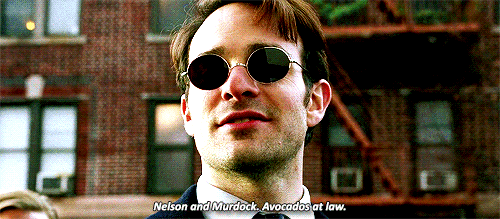
when i was really little, my babysitter only spoke spanish with me so i became bilingual but i never knew when i was speaking spanish or english. one time i told my mom i wanted an avocado & she understood but then when i said the same thing to my babysitter later that day, she burst into tears with laughter because i was saying “quiero abogado” which means “i want a lawyer.”
imagine a two year old repeatedly saying “i want a lawyer!” as an adult laughs at her.
Reminding me of also funny story: So my piano teacher of many years when I was a kid had a baby when I was in my teens. This little girl was super bright, and also bilingual in Mandarin and English from her first word.
I do not speak Mandarin. At all.
One day as I’m waiting for my mom to pick me up after the lesson, Baby Girl is playing in the kitchen and hears me sneeze! And she runs over and says, “You need [incomprehensible]?”
Now here’s the thing: I knew she was not speaking Mandarin. I don’t speak it, but my aunt and uncle both do, and a close family friend’s family growing up would code-switch quite comfortably around us. I was old enough and it was sufficiently different from English that because there was no formal teaching, I never derived anything from it? But I was very familiar with how it sounds to an uncomprehending ear.
What she said did not sound like Mandarin at all. It sounded like gibberish. Like English baby gibberish.
As I clearly didn’t understand, Baby Girl repeats, “You need [gibberish]!” and then, when I still don’t understand, she stamps her foot and makes Angry Noise at me, which attracts her mother’s attention.
Bewildered, I relate what’s going on. Her mother covers her face and says, “She wants to know if you want a kleenex.”
And then my piano teacher explained that Baby Girl had figured out that some people didn’t speak English and some people didn’t speak Mandarin and she needed to confine herself to one language around them.
But sometimes, as is very natural especially for quite young children, she’d run up against realizing she didn’t know the word for something – and sometimes she knew the word in one language, but not in the other!
And it seemed intuitive to her that the way to fix this was to say the word from the other language … with the right accent.
So what she’d been doing was taking the word for “tissue” or “kleenex” in Mandarin and saying it like an Anglophone would: no tone-change and different vowel shapes and all. And it made Baby Girl VERY FRUSTRATED when this did not solve the problem, and at that point she seemed to believe that the adults around her were being stupid on purpose.









 The Chaos Bitches